Hexagonal Growth Structures Displaying Gota de Aceite Effect in Colombian Emerald
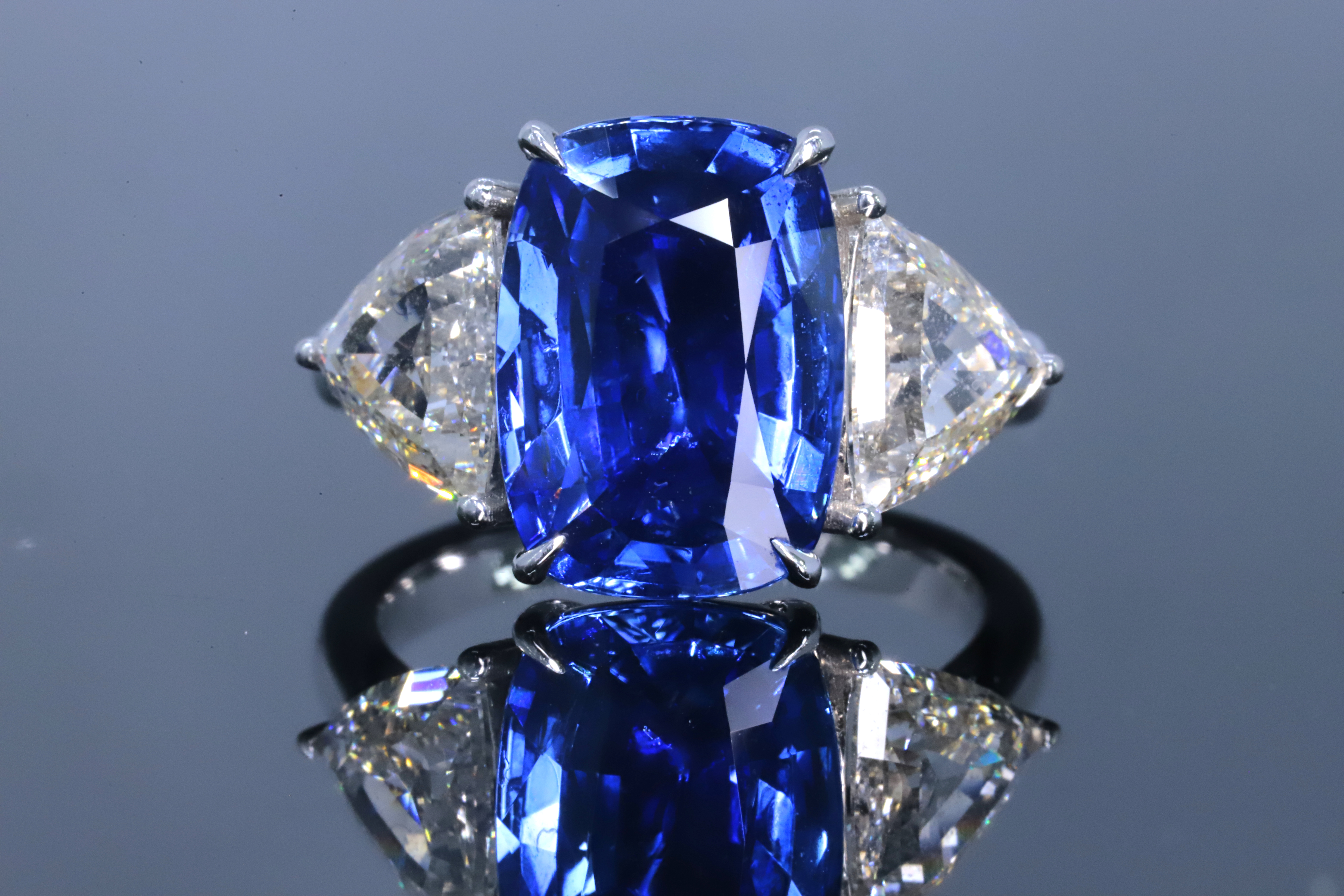
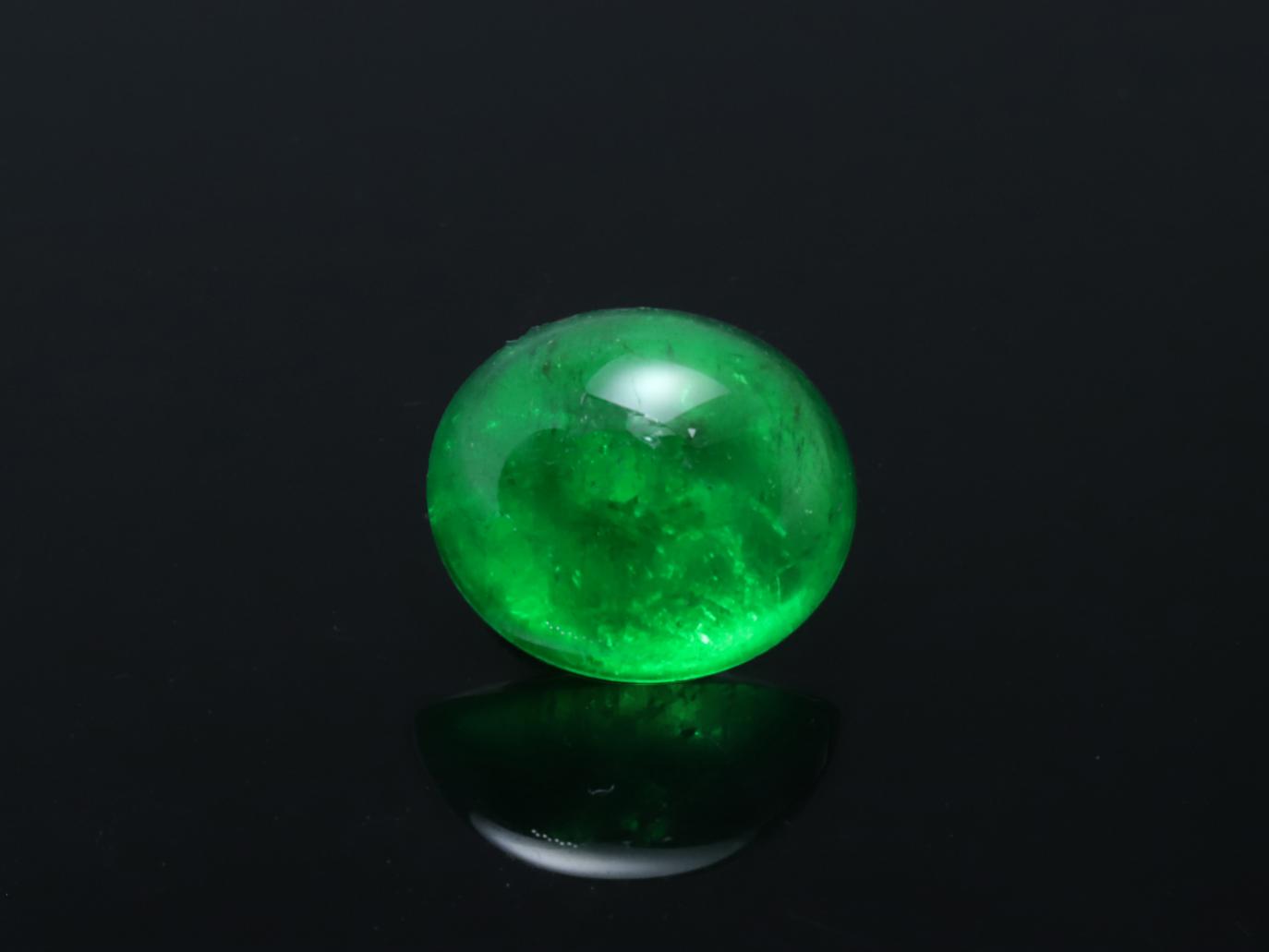
In September 2021, Guild Gem Laboratories examined a 1.27 ct green cabochon (Figure 1), which was identified as emerald by standard gemmological testing (RI of approximately 1.57 and hydrostatic SG of 2.70). Ultraviolet-visible (UV-Vis) spectroscopy and energy-dispersive X-ray fluorescence (EDXRF) analysis revealed low Fe and relatively high Cr, consistent with the composition of Colombian emeralds.
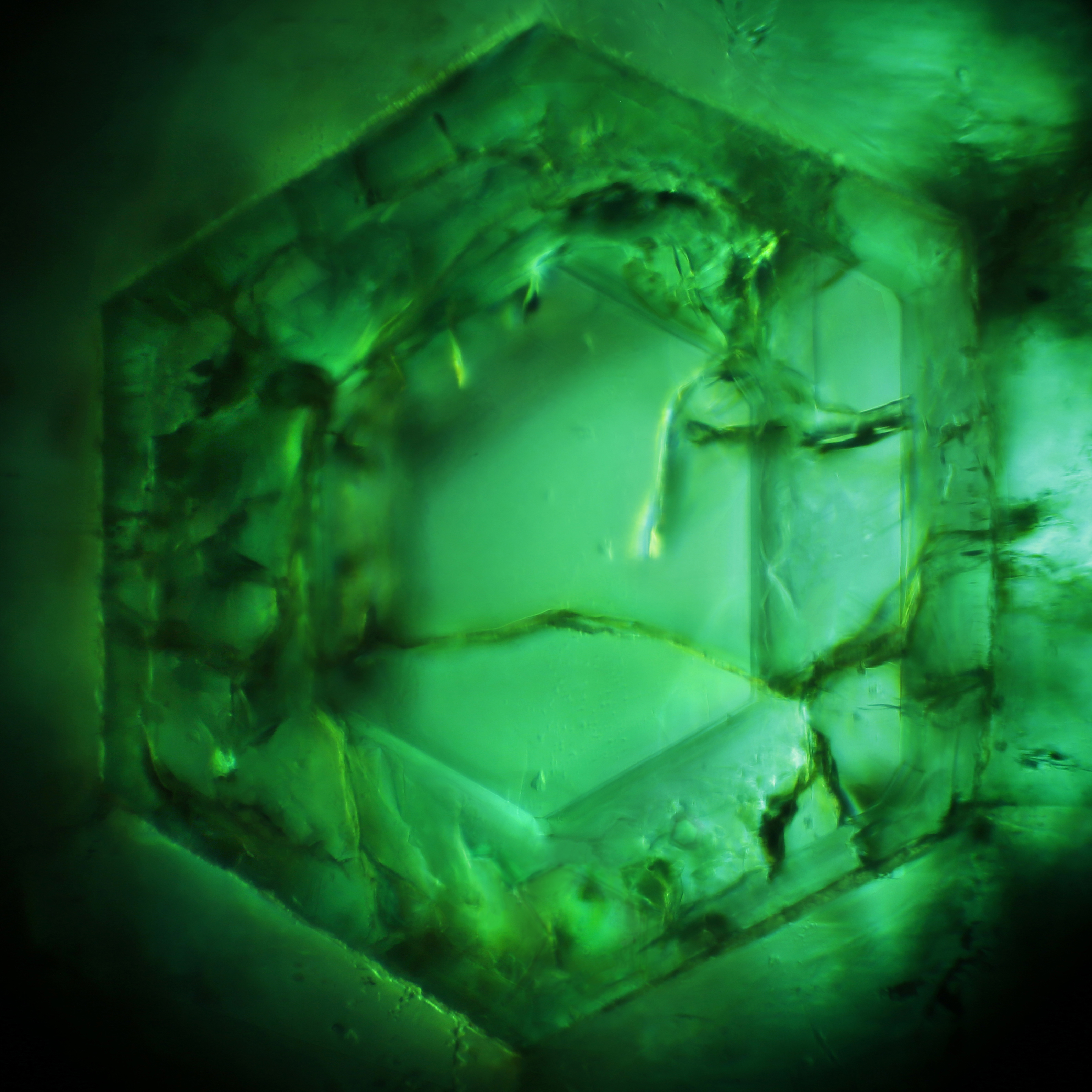
The c-axis was determined to be perpendicular to the base of the cabochon using a polariscope and conoscope. Microscopic observation down the c-axis showed hexagonal growth structures with clear outlines (Figure 2). These growth structures were composed of three main parts: a dark green rim, a medium green transition area, and a lighter green core, as diagrammed in Figure 3.
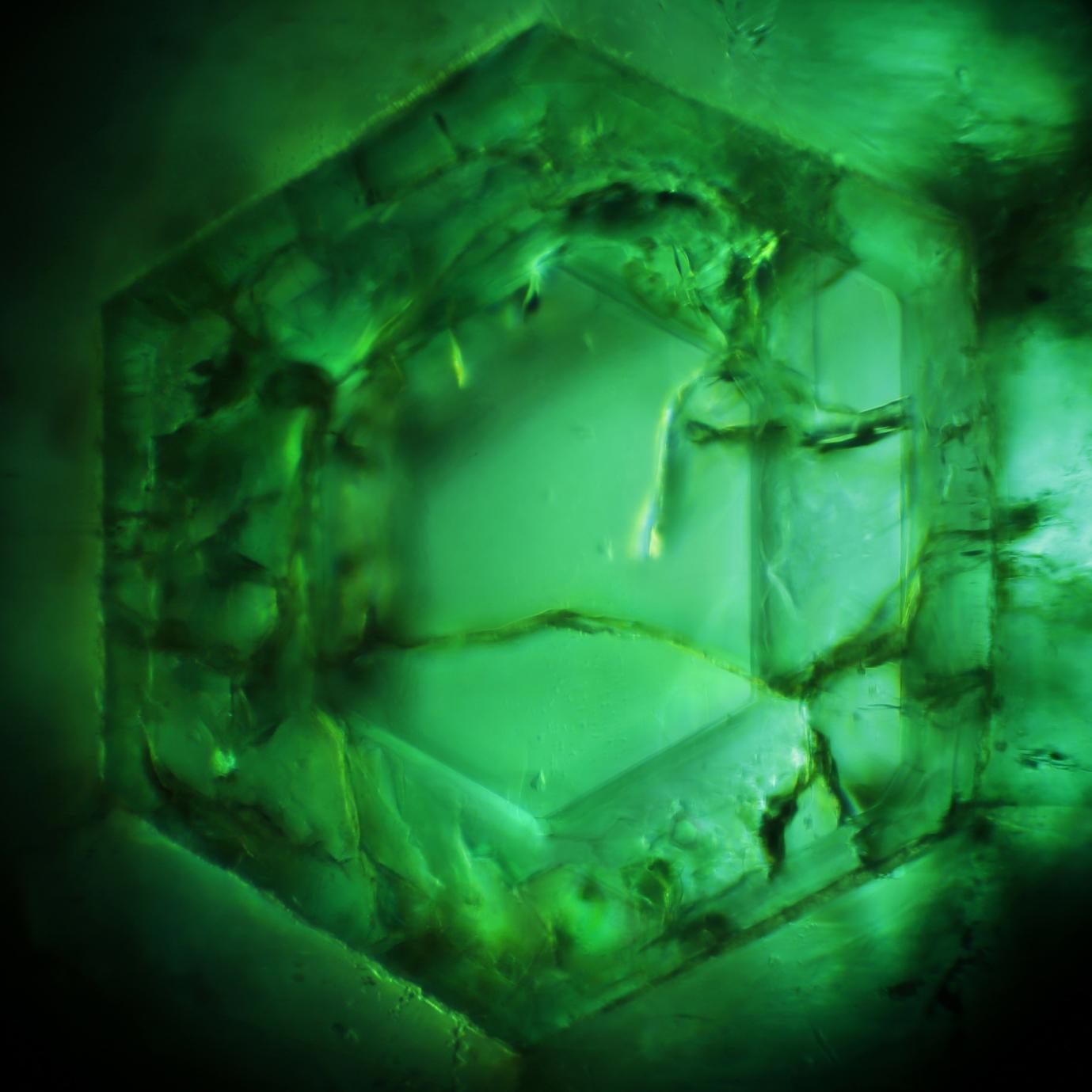
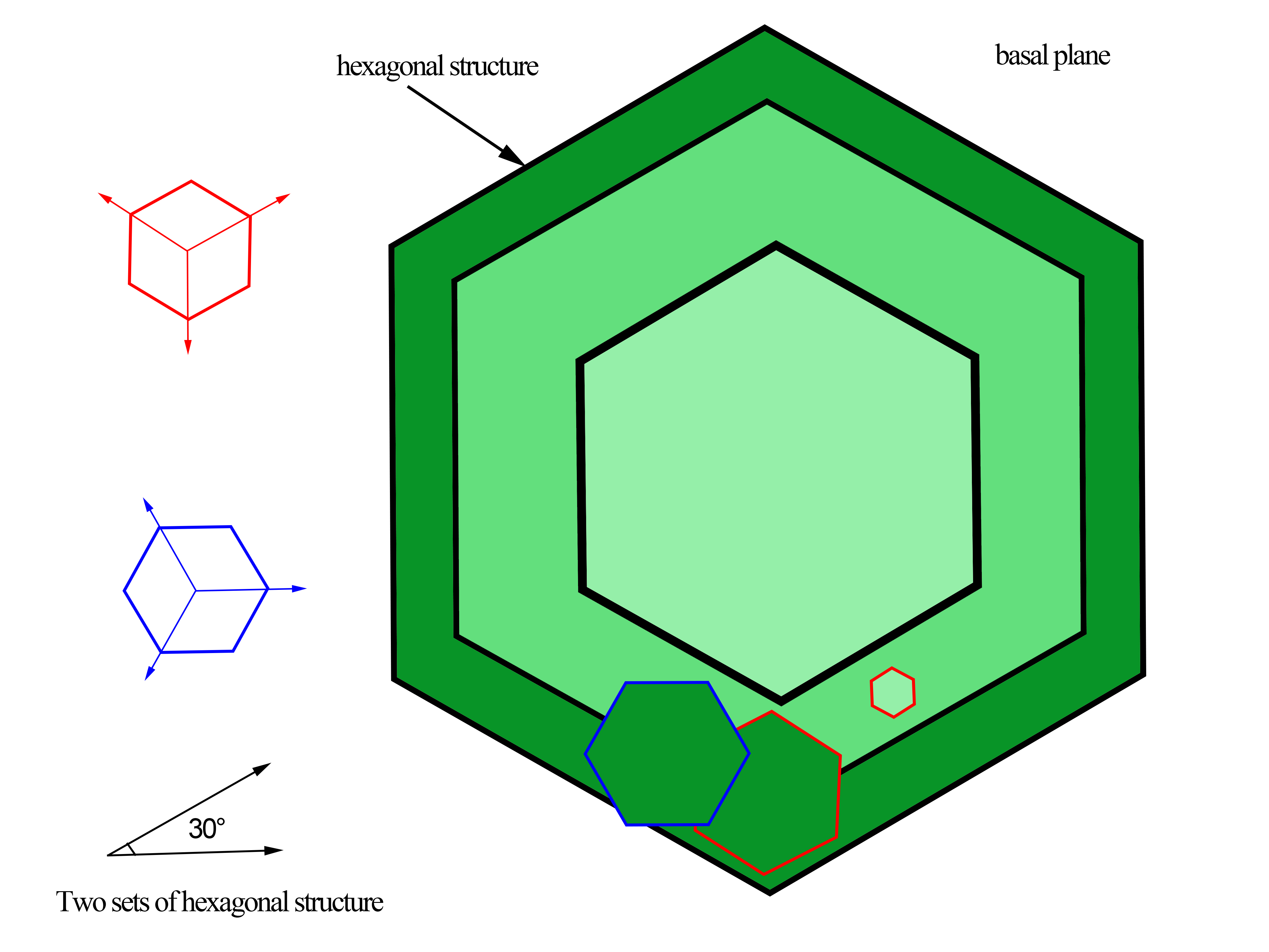
In addition, the gota de aceite (‘oil drop’, or roiled appearance) phenomenon was present within the dark green and medium green hexagonal structures. Closer examination showed three smaller sub-areas of hexagonal zoning (again, see Figures 2 and 3). The smallest of these hexagonal sub-zones was light green, while the two larger ones displayed a more saturated green colour, comparable with colour trends noted previously in emerald (Ringsrud 2008; Gao et al. 2017). Two of the sub-zones were parallel to the outer hexagonal prism of the host crystal, while the third was rotated by 30° (Figure 3), also consistent with the crystal habit of beryl.
We deduce that this emerald formed by the simultaneous growth of several hexagonal prisms proceeding in the same direction parallel to the c-axis. Various factors such as differential growth rate, the supply of nutrients and the particular conditions during emerald crystallisation may have given rise to the interesting growth disturbances in this emerald.
Xueying Sun and Yujie Gao (peter.gao@guildgemlab.com)
Guild Gem Laboratories
Shenzhen, China
References
Gao, Y., Carmona, C. & Lin, Q. 2017. “Gota de aceite” effect in emerald: Observation and cause. Gems & Technology 2017, Beijing, China, 95–97.
Ringsrud, R. 2008. Gota de aceite: Nomenclature for the finest Colombian emeralds. Gems & Gemology, 44(3), 242–245, https://doi.org/10.5741/GEMS.44.3.242.