Sapphire from Sri Lanka with Twinned Gahnospinel Inclusion
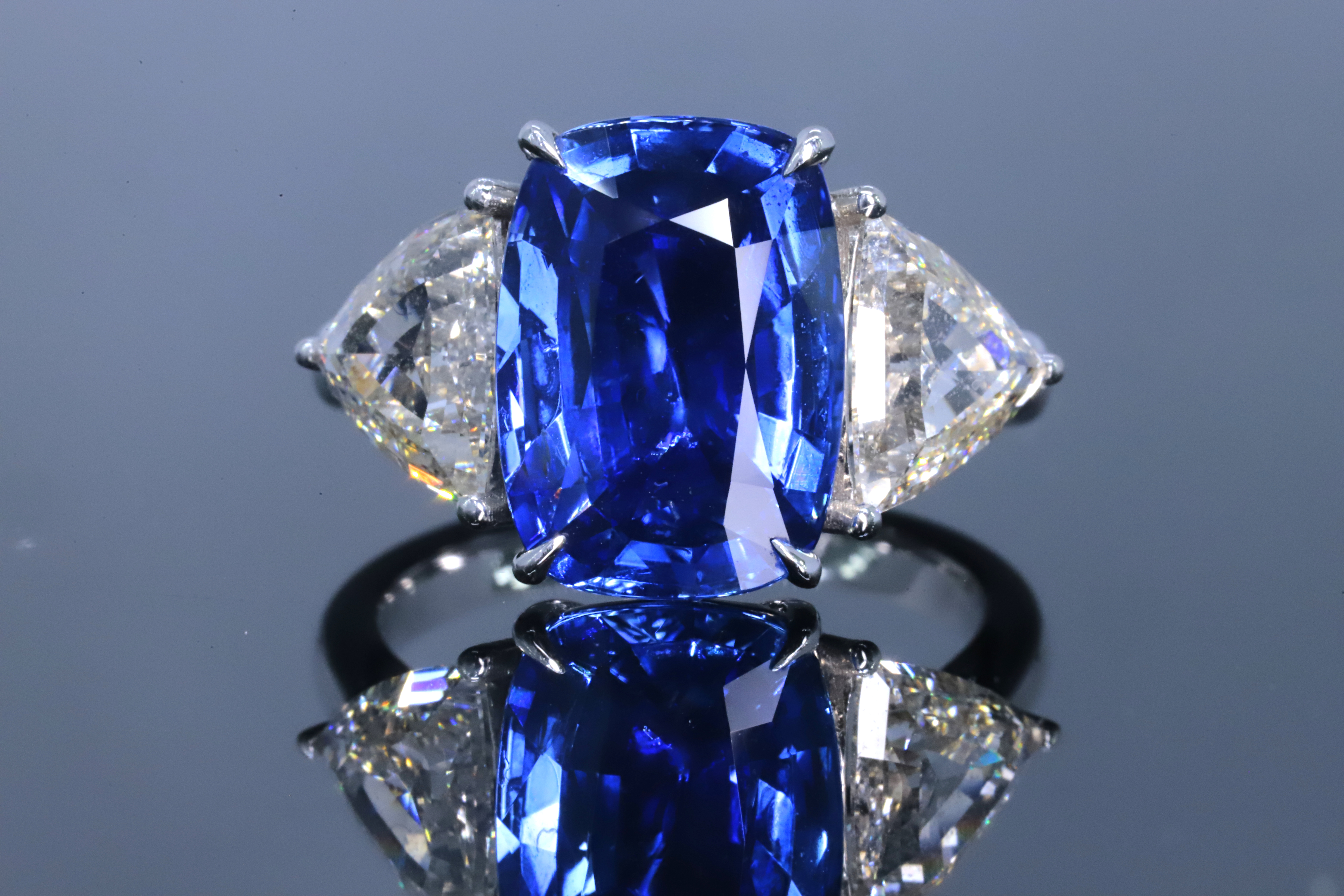
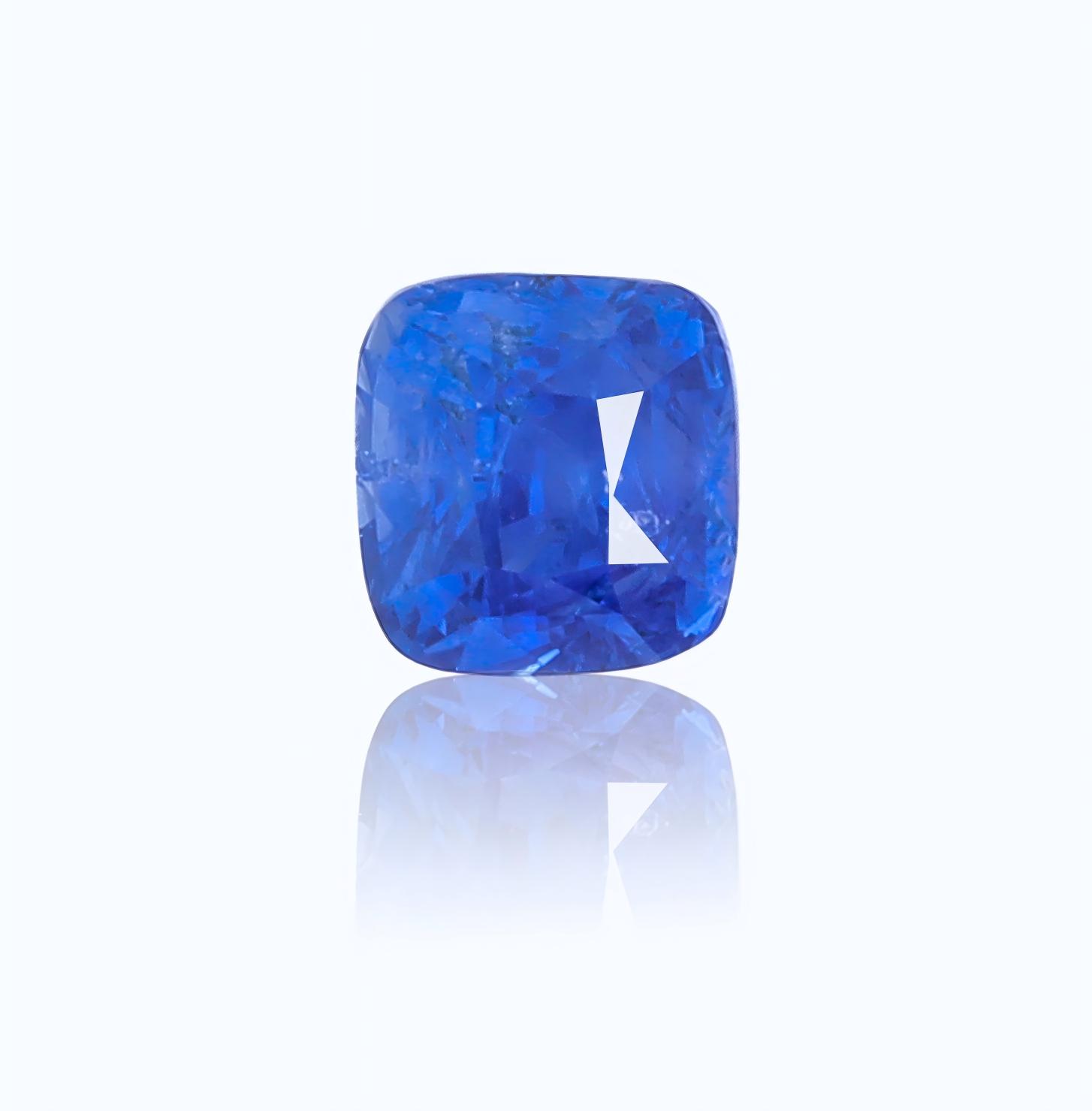
Recently, a 4.08 ct blue faceted gemstone (Figure 24) was submitted to GUILD Gem Laboratories (Shenzhen) for origin determination. Standard gemmological testing and Raman spectroscopy revealed that it was sapphire. Chemical analysis by EDXRF spectroscopy revealed moderate Fe (834 ppmw) and low Ga (41 ppmw). This composition, along with the presence of oriented, long rutile needles (Figure 25), indicated that this sapphire was from Sri Lanka (Palke et al. 2019).
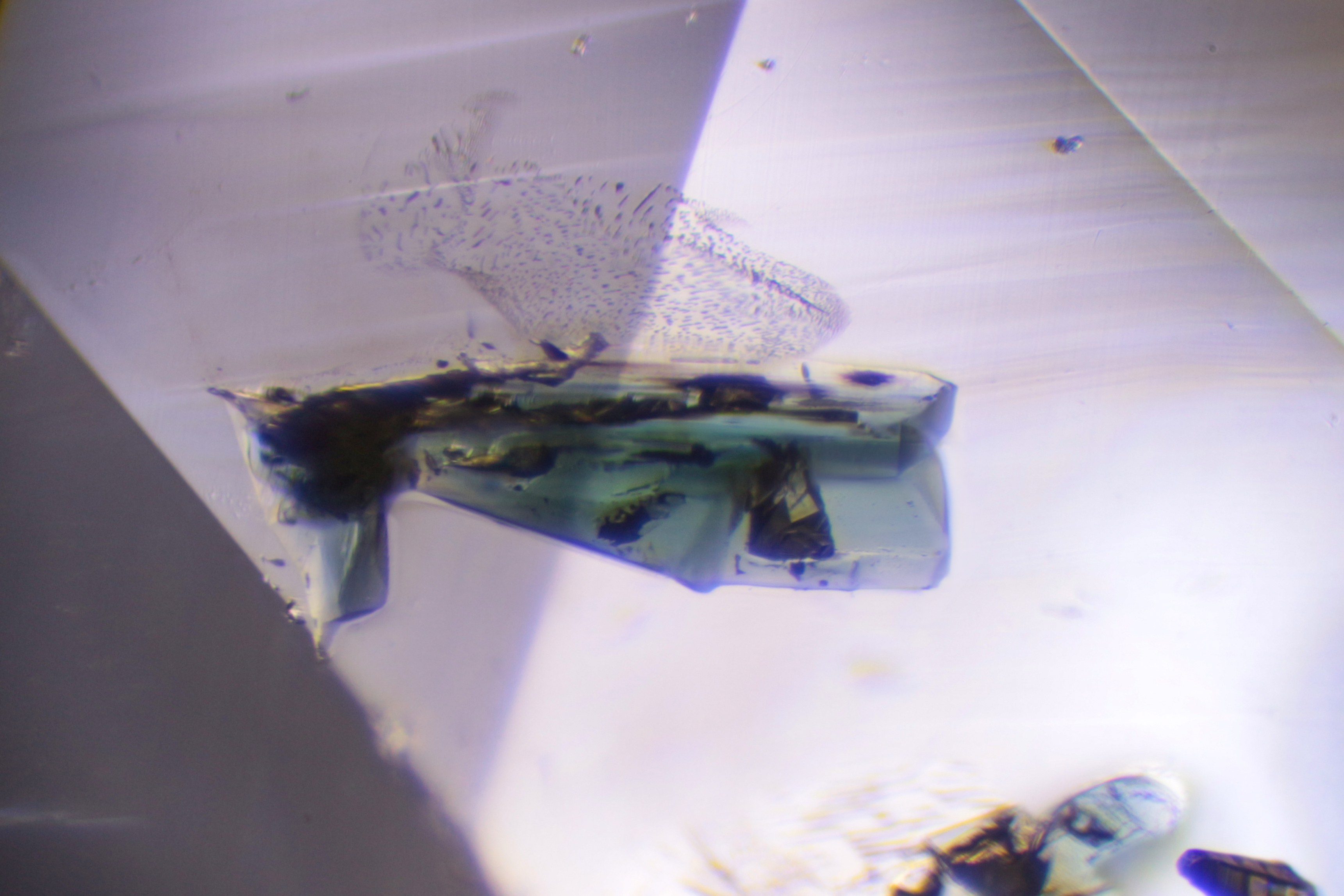
Notably, the sapphire contained a conspicuous dark green crystalline inclusion with several metallic-appearing minerals attached to it (Figure 26). Its well-formed morphology indicated the crystal’s protogenetic origin. Raman spectroscopy revealed peaks at 309, 406, 532, 623, 662, 702 and 765 cm–1 (Figure 27), consistent with reference spectra for gahnite (ZnAl2O4) and spinel (MgAl2O4). According to reference spectra in the RRUFF database, the peaks at 532, 623 and 702 cm–1 correspond to gahnite, and those at 309, 406, 662 and 765 cm–1 are assigned to spinel. Gahnite and spinel form a solid-solution series, and intermediate compositions are commonly referred to as ‘gahnospinel’. Careful observation revealed the gahnospinel in this sapphire appeared to be twinned. Unfortunately, we were unable to identify the attached metallic-appearing minerals.
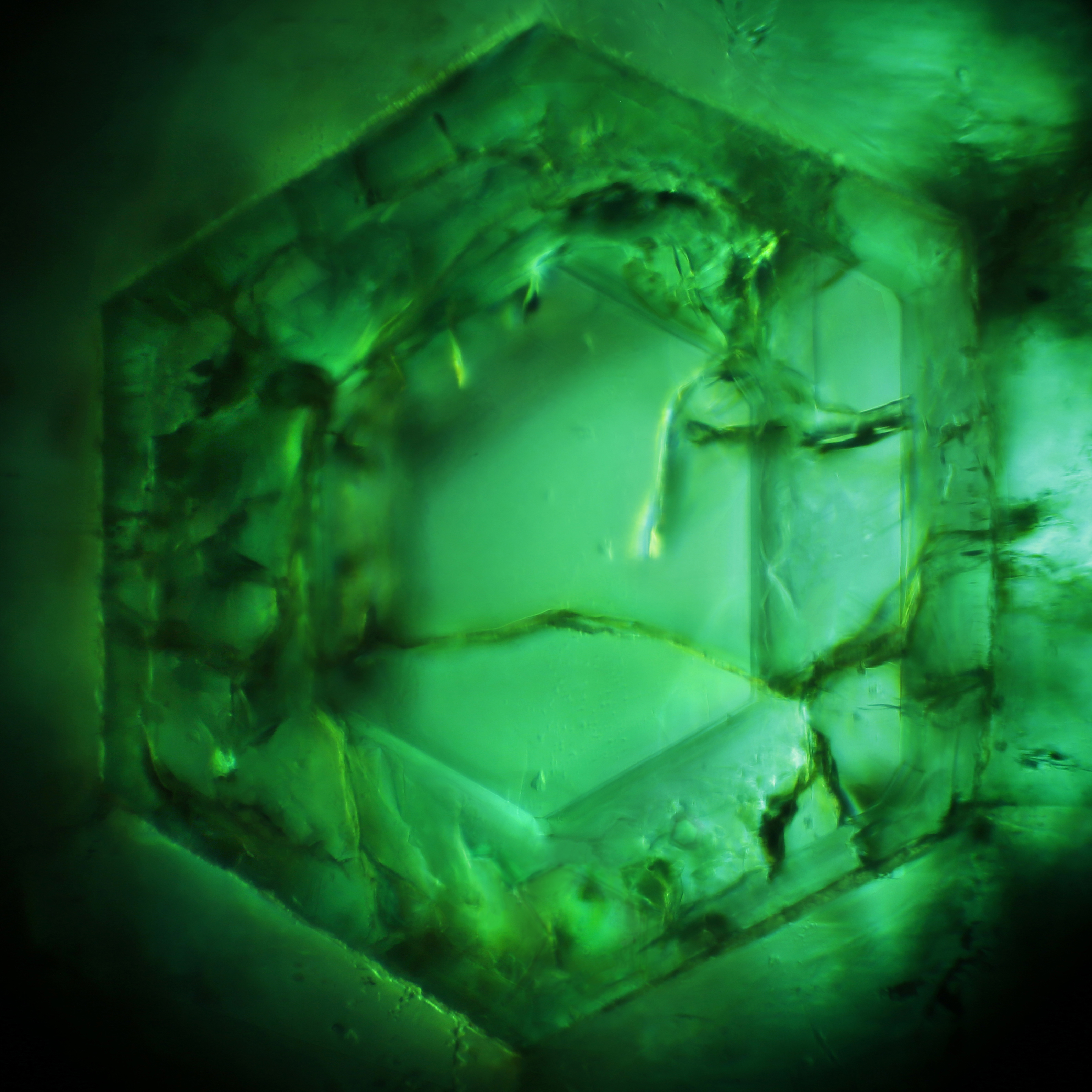
 Figure 25: The gem contains an oriented network of long rutile needles, typical of Sri Lankan sapphire. Photomicrograph by Huixin Zhao; image width 1.9 mm. | 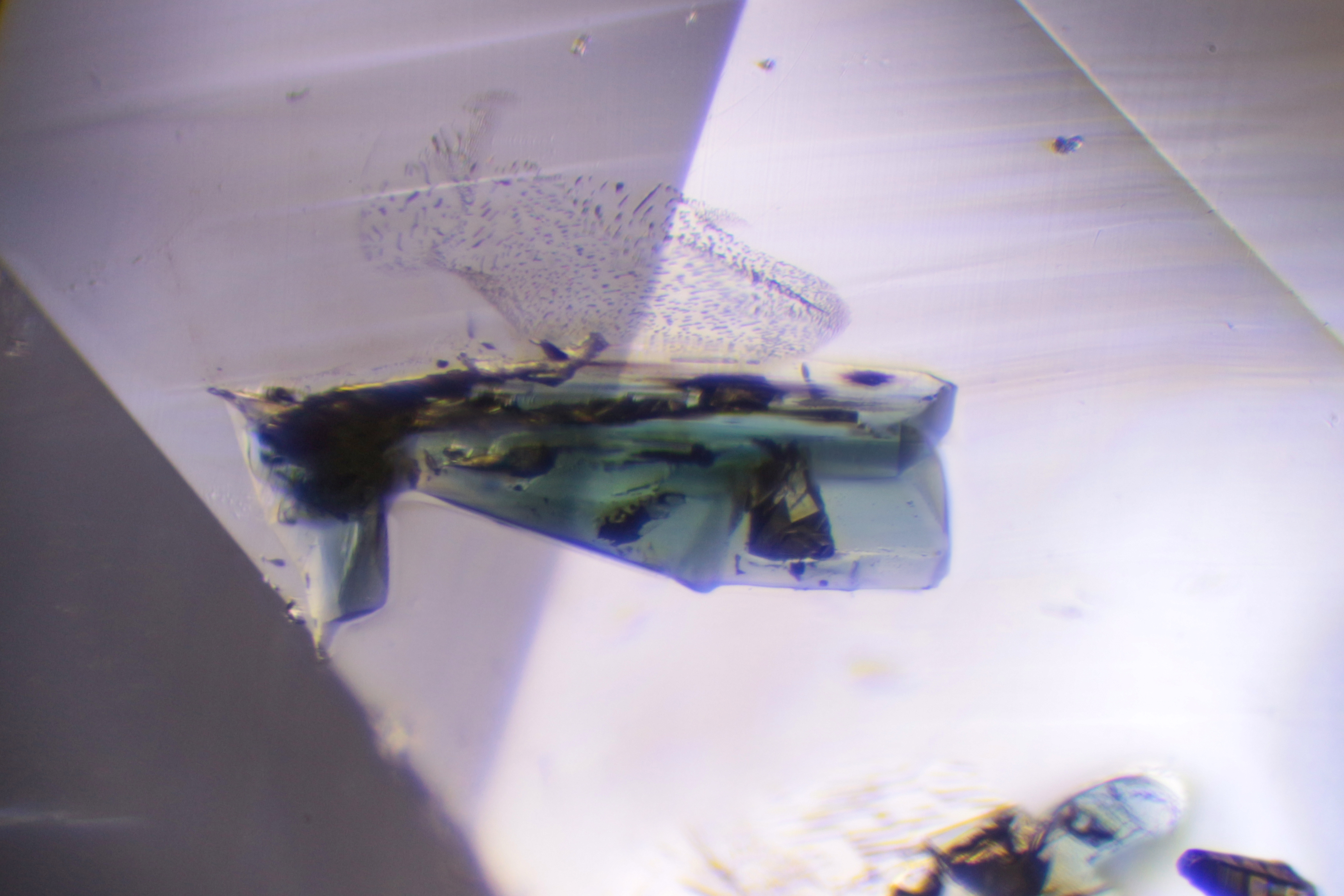 Figure 26: A green twinned crystal present in the sapphire in Figure 24 was identified as gahnospinel. Photomicrograph by Huixin Zhao; image width 1.1 mm. |
Although spinel has been previously documented as a protogenetic inclusion in sapphire—and may point specifically to a Sri Lankan origin—it typically is encountered as simple octahedral crystals (Gübelin & Koivula 2008; Smith 2018). To our knowledge, this is the first time a twinned gahnospinel crystal has been reported in a Sri Lankan sapphire. This discovery provides further insights into the genesis and geological background of Sri Lankan sapphire.
Ziyun Zhang, Xueying Sun
(shirley.sun@Guildgemlab.com)
and Yujie Gao
GUILD Gem Laboratories
Shenzhen, China
References
Gübelin, E.J. & Koivula, J.I. 2008. Photoatlas of Inclusions in Gemstones, Vol. 3. Opinio Publishers, Basel, Switzerland, 672 pp.
Palke, A.C., Saeseaw, S., Renfro, N.D., Sun, Z. & McClure, S.F. 2019. Geographic origin determination of blue sapphire. Gems & Gemology, 55(4), 536–579, https://doi.org/10.5741/gems.55.4.536.
Smith, C.P. 2018. Gem Notes: Sri Lankan sapphire with spinel inclusions. Journal of Gemmology, 36(4), 291.